

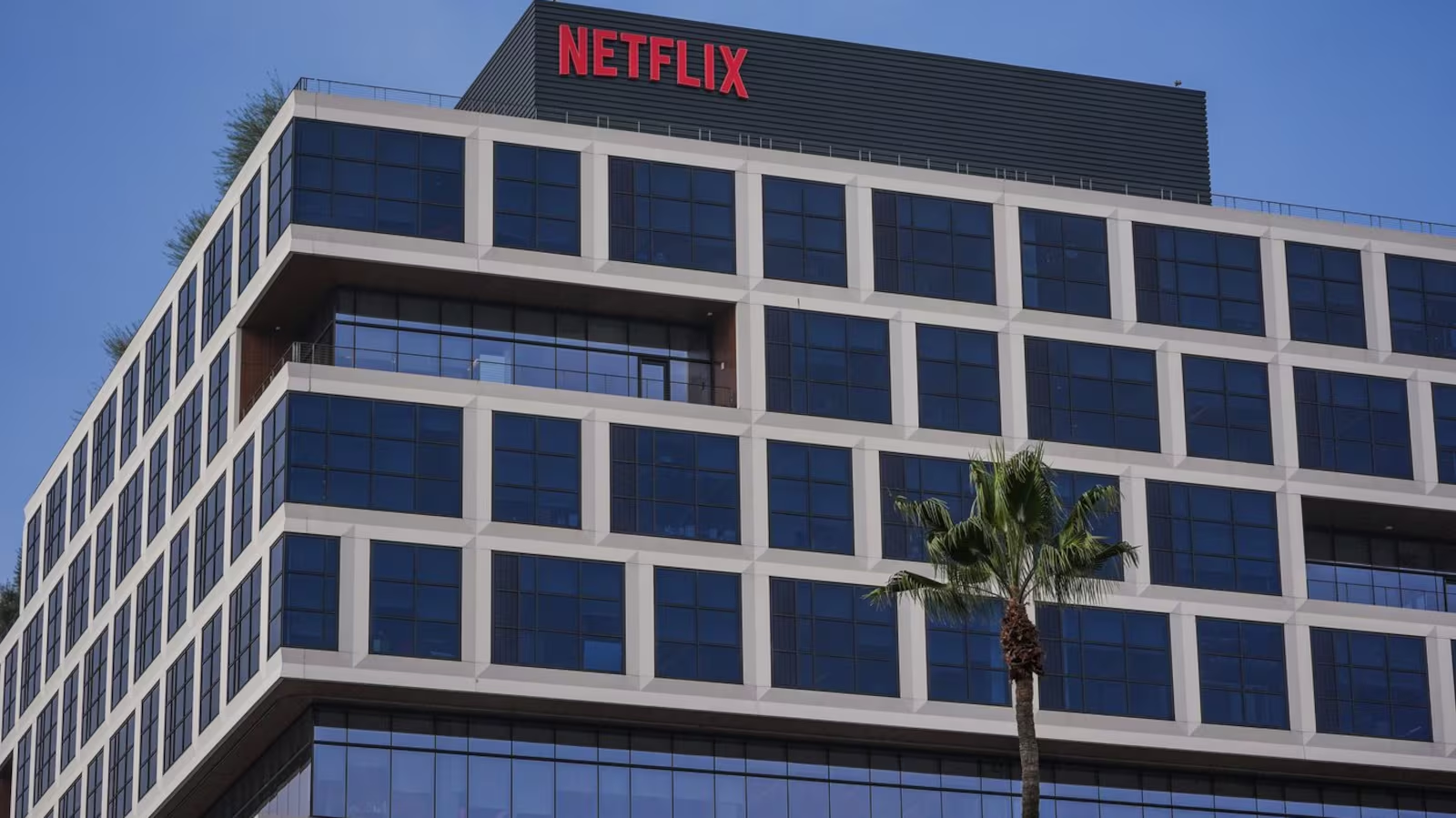
In a high-stakes political debate intersecting digital trade, broadcasting policy, and international relations, Canada’s leading cultural, film, and broadcasting industry coalitions issued an urgent petition to federal Economic Task Force Chair Mark Carney, demanding the Canadian government defend mandatory Canadian Content (CanCon) financial contributions required from foreign streaming platforms.
As detailed in political reporting published by BNN Bloomberg Politics, the coalition’s joint statement follows intense lobbying from major U.S. tech firms and trade negotiators seeking to rollback the 5% mandatory revenue contribution rule enacted under Canada’s Online Streaming Act.
Key Takeaways from the CanCon Streaming Policy Dispute
- $200 Million Annual Cultural Fund at Risk: Scrapping the mandatory 5% streaming levy would eliminate an estimated $200 million annually dedicated to independent Canadian TV, film, and music production.
- Cross-Border Trade Friction: U.S. trade representatives argue the mandatory levy acts as a discriminatory tariff on American streaming giants (Netflix, Disney+, Amazon Prime Video).
- Mark Carney’s Pivotal Economic Role: As key economic adviser to the Liberal government, Carney faces pressure to balance bilateral trade relations with domestic cultural protectionism.
- Global Digital Sovereignty Precedent: Serves as a test case for how sovereign nations regulate multinational digital entertainment platforms in the streaming era.
The Online Streaming Act and Cultural Sovereignty
For decades, traditional Canadian television broadcasters and radio stations were legally mandated to dedicate a percentage of their gross revenues toward funding local news, French-language content, and domestic TV and film production. As consumer viewing habits shifted rapidly from linear cable television to foreign over-the-top (OTT) streaming services, domestic production funds faced severe budget shortfalls.
Historical Context: Canadian Content Regulations
Traditional Broadcasting Era (1970s-2010s):
- CRTC mandates: Canadian broadcasters required to air 50-60% Canadian content during primetime
- Financial contributions: Broadcasters contributed 5% of revenues to Canadian production funds
- Results: Funded iconic Canadian productions like “Degrassi,” “Anne of Green Gables,” “Corner Gas”
- French-language protection: Specific quotas for Francophone content in Quebec
The Streaming Disruption (2015-2020):
- Cable cord-cutting: Millions of Canadians cancelled traditional TV subscriptions
- Revenue collapse: Broadcaster contributions to production funds declined 30-40%
- Foreign dominance: Netflix, Disney+, Amazon captured 70%+ of video streaming market
- Regulatory gap: Foreign streamers operated without any Canadian content obligations
Bill C-11: The Online Streaming Act
Canada’s Parliament passed the Online Streaming Act (Bill C-11) to level the playing field, requiring foreign digital streaming services generating over $50 million in domestic revenue to contribute 5% of their Canadian earnings into domestic production funds (such as the Canada Media Fund and the Independent Production Fund).
Key provisions of the Act:
- Revenue threshold: Applies to platforms earning $50M+ annually in Canada
- 5% contribution: Mandatory payment to Canadian production funds
- Platform scope: Covers Netflix, Disney+, Amazon Prime Video, Spotify, Apple Music
- CRTC oversight: Canadian Radio-television and Telecommunications Commission enforces compliance
- Implementation: Phased rollout beginning 2024-2025
Estimated annual revenue impact:
- Netflix Canada: ~$1.2B revenue → $60M contribution
- Disney+ Canada: ~$800M revenue → $40M contribution
- Amazon Prime Video: ~$600M revenue → $30M contribution
- Spotify: ~$500M revenue → $25M contribution
- Apple Music/TV+: ~$400M revenue → $20M contribution
- Others: ~$500M revenue → $25M contribution
- Total: ~$4B streaming revenue → $200M annual fund
The cultural sector argues this mechanism is vital to preserving national storytelling against global media consolidation.
“Canadian stories, indigenous programming, and independent journalism cannot survive if global tech monopolies extract billions from Canadian subscribers without contributing to the domestic creative ecosystem. Mark Carney and the government must stand firm on Canadian cultural sovereignty.”
Global Digital Streaming Regulation & Local Content Contribution Matrix
| Jurisdiction & Policy Framework | Mandatory Local Content Levy Rate | Platform Coverage Scope | Primary Political Objective |
|---|---|---|---|
| Canada (Online Streaming Act – CanCon) | 5.0% of Gross Domestic Revenue | Global OTT Streamers & Music Platforms (> $50M Rev) | Supporting domestic independent film, television, indigenous, & French-language content. |
| European Union (AVMSD Directive) | Quota: 30% European Works Catalog Minimum | All On-Demand Video Services Operating in EU | Preserving European cultural diversity and supporting regional production hubs. |
| Australia (Streaming Investment Quota) | 5.0% Investment Mandate on Local Drama/Docs | Subscription Video on Demand (SVOD) Platforms | Stimulating domestic Australian screen industry employment and studio production. |
| United Kingdom (Media Act Reform) | Public Service Broadcasting Prominence Rules | Connected TV Platforms & Smart Devices | Ensuring free public service news and cultural channels maintain top platform visibility. |
Who Is Mark Carney and Why Does His Opinion Matter?
Mark Carney’s involvement elevates this from a cultural policy dispute to a major economic and trade policy question:
Mark Carney’s Background
- Former Bank of Canada Governor: Led Canadian central bank 2008-2013 during financial crisis
- Former Bank of England Governor: First non-British Governor of Bank of England (2013-2020)
- UN Special Envoy on Climate Action: Coordinated private sector climate finance initiatives
- Current role: Chair of federal Economic Task Force advising Liberal government
- Potential future: Rumored candidate for Liberal Party leadership
Why His Position Matters
- Trade expertise: Deep experience negotiating international trade and regulatory frameworks
- Government influence: Direct advisory channel to Prime Minister and Finance Minister
- Business credibility: Respected by both tech industry and traditional sectors
- Political weight: His recommendations carry significant policy-making authority
The Pressure Campaign
Cultural sector petition:
- Signed by 100+ industry organizations
- Representing writers, directors, producers, actors, musicians
- Includes unions (ACTRA, Directors Guild of Canada, Writers Guild)
- French-language cultural associations in Quebec
- Indigenous media organizations
Counter-lobby from streaming platforms:
- Netflix, Disney, Amazon retain trade law firms
- Argument: 5% levy is discriminatory trade barrier
- Threat: May pass costs to Canadian consumers via price increases
- Warning: Could invite U.S. trade retaliation under USMCA
Video Briefing & Political Economy Market Analysis
Digital Trade Politics & Global Streaming Regulations
Watch broadcast political and media policy analysis on international trade disputes, digital tariffs, and cultural protectionism shaping the future of global streaming markets.
The Economic Debate: Tariff Retaliation vs. Independent Production Survival
The policy impasse presents a classic trade-off between international trade diplomacy and domestic industrial strategy:
The Business Case Against the Levy
Streaming giants argue that mandatory levies increase subscription prices for Canadian consumers and invite trade retaliation under the United States-Mexico-Canada Agreement (USMCA).
Key arguments from streaming platforms:
1. Discriminatory Treatment
- Foreign services face 5% levy; Canadian services exempt (if under revenue threshold)
- Violates national treatment principles in USMCA Chapter 19 (Digital Trade)
- Creates artificial competitive advantage for domestic platforms
2. Consumer Price Impact
- 5% levy likely passed through to subscribers as price increases
- Estimated $0.75-$1.25/month increase per subscription
- Affects affordability during inflation and cost-of-living crisis
- May drive consumers to piracy or free ad-supported services
3. Trade Retaliation Risk
- U.S. Trade Representative could challenge under USMCA dispute resolution
- Potential retaliatory tariffs on Canadian exports (lumber, agriculture, manufacturing)
- Sets precedent for other countries to impose similar levies
- Undermines North American digital economy integration
4. Investment Chilling Effect
- Reduces streaming platforms’ willingness to invest in Canadian productions
- Netflix already spends $500M+ annually on Canadian content (voluntarily)
- Mandatory levy may crowd out direct production investments
- Could relocate production to U.S. studios to avoid levy
The Cultural Case For the Levy
Independent producers emphasize that without dedicated fund contributions, thousands of specialized jobs in Toronto, Montreal, and Vancouver’s film production hubs will disappear.
Key arguments from cultural sector:
1. Level Playing Field
- Canadian broadcasters have paid into production funds for 50+ years
- Foreign streamers captured market share without any obligations
- 5% levy simply extends existing policy to new digital platforms
- Ensures fair competition between domestic and foreign services
2. Production Fund Shortfall
- Traditional broadcaster contributions declined $150M+ due to cord-cutting
- Canada Media Fund facing budget crisis
- Independent producers unable to secure financing
- $200M annual streaming levy fills the funding gap
3. Economic Multiplier Effect
- Canadian film/TV industry: $12.2B economic output
- Employs 179,000 full-time equivalent jobs
- $200M levy generates $600M+ in production activity (3x multiplier)
- Supports makeup artists, set designers, post-production, catering, etc.
4. Cultural Sovereignty
- Canadian stories reflect unique national identity
- Indigenous storytelling requires dedicated funding
- French-language content critical for Quebec cultural preservation
- Without levy, U.S. content dominates Canadian viewing habits completely
The Role of French-Language Media
Francophone cultural associations in Quebec highlight that streaming levies are critical to funding French-language programming in North America.
Quebec’s unique cultural challenges:
- Linguistic minority: 8M French speakers surrounded by 350M+ English speakers
- Market size: Too small to attract major streaming investments without mandates
- Cultural protection: French-language content essential to Quebec identity
- Political sensitivity: Federal-provincial tensions if government abandons levy
French-language production funding:
- 30-40% of Canada Media Fund goes to French-language projects
- Supports Télé-Québec, Radio-Canada productions
- Funds Quebec cinema (Denis Villeneuve, Xavier Dolan emerged from this system)
- Without levy, French-language TV industry faces collapse
Political Implications for the Liberal Government and USMCA Trade Negotiations
How the federal government handles the CanCon levy issue carries immediate political consequences:
1. Navigating USMCA Joint Review Negotiations
As formal review discussions for the USMCA trade pact approach, digital trade barriers remain a primary friction point between Ottawa and Washington.
USMCA context:
- Review clause: USMCA requires joint review in 2026 (this year)
- Renewal decision: Partners must decide whether to extend agreement
- U.S. priorities: Digital services, dairy access, automotive rules of origin
- Canada priorities: Maintain cultural exemptions, protect supply management
Negotiating dynamics:
- U.S. Trade Representative likely to demand streaming levy rollback
- Canada must defend cultural exemption carved out in original USMCA
- Risk: U.S. threatens not to renew agreement
- Pressure: Manufacturing and agricultural sectors want smooth renewal
2. Balancing Inflation Concerns with Cultural Support
Policy advisers must weigh potential subscription price hikes against the economic vitality of the $12 billion Canadian creative economy.
Political calculation:
- Consumer impact: ~20M Canadian households subscribe to streaming services
- Price sensitivity: $1/month increase = $240M annually from consumers
- Optics: Government adding costs during cost-of-living crisis
- Counter-narrative: Supporting Canadian jobs and culture
3. Political Parliamentary Alignment
Opposition parties and regional caucuses in Quebec closely monitor whether federal leaders maintain firm support for domestic cultural funding.
Party positions:
Liberal Government (Trudeau):
- Passed Bill C-11 with strong cultural protections
- Under pressure from U.S. trade negotiators
- Mark Carney’s advice could shift position
- Weak in polls, needs Quebec support
Conservative Opposition (Poilievre):
- Generally skeptical of cultural subsidies
- Pro-business, pro-trade stance
- But cannot afford to lose Quebec seats
- May criticize levy as “Netflix tax” on consumers
NDP (Singh):
- Strong support for cultural workers and unions
- Advocates for maintaining 5% levy
- Frames as protecting Canadian jobs
Bloc Québécois:
- Strongest defenders of streaming levy
- Represents Quebec’s French-language interests
- Threatens to withdraw parliamentary support if levy scrapped
- Could trigger government collapse
International Precedents: How Other Countries Handle Streaming
European Union: AVMSD Directive
Policy framework:
- Catalog quota: 30% of content must be European productions
- Prominence: European works must be prominently featured
- Investment levies: Some countries add financial contributions (France: 25%)
- Enforcement: Coordinated across 27 EU member states
Results:
- Surge in European co-productions (e.g., “Dark,” “Money Heist,” “Lupin”)
- Netflix, Disney invest heavily in European studios
- U.S. streamers initially protested, now comply
- Legitimizes cultural protections in digital age
Australia: Streaming Investment Quota
Policy framework:
- 5% mandate: Streamers must invest 5% of Australian revenue in local content
- Drama focus: Investment must go to scripted drama and documentaries
- Enacted 2024: Similar timeline to Canada
Results:
- Estimated $200M-$300M annually for Australian productions
- Revitalizes Sydney and Melbourne studio infrastructure
- Limited trade pushback from U.S. (Australia has strong bilateral ties)
France: Aggressive Cultural Protection
Policy framework:
- 25% levy: Streamers contribute 25% of French revenue to production funds
- Theatrical windows: Films must wait 6+ months before streaming release
- French-language quotas: Significant portion of catalog must be in French
Industry response:
- Netflix threatened to reduce French investments
- Eventually complied and now produces major French content
- Cannes Film Festival ongoing tensions with streamers
What Canadian Productions Have Been Funded?
To understand what’s at stake, consider recent Canadian productions funded through these mechanisms:
Recent Canadian Successes
- “Schitt’s Creek”: CBC/Canada Media Fund → Global Emmy winner
- “Kim’s Convenience”: CBC/CMF → Netflix global distribution
- “Letterkenny”: Bell Fund/CMF → Cult following internationally
- “Orphan Black”: Space/CMF → International sci-fi hit
- “The Handmaid’s Tale”: Canadian co-production with U.S. (shot in Toronto)
Indigenous Content
- “Reservation Dogs”: Indigenous-led comedy (Canada-US co-pro)
- APTN productions: Dedicated Indigenous broadcaster funded by system
- Documentary funding: Stories from First Nations, Inuit, Métis communities
French-Language Content
- “District 31”: Quebec’s most-watched drama
- “Les pays d’en haut”: Historical drama
- Quebecois cinema: Denis Villeneuve, Xavier Dolan, Philippe Falardeau
Actionable Guidance for Media Executives and Production Directors
For production companies and digital media executives navigating changing content regulations:
1. Diversify Co-Production Financing Structures
Build international co-production partnerships that leverage both domestic fund grants and global streaming distribution deals.
Financing strategies:
- Canada-Europe co-pros: Access both CMF and EU funds
- Tax credit stacking: Federal + provincial incentives
- Pre-sales: Secure international broadcaster commitments early
- Streaming partnerships: Negotiate direct commissioning deals with platforms
2. Track CRTC Policy Guidelines
Monitor upcoming Canadian Radio-television and Telecommunications Commission (CRTC) public hearings regarding flexible investment definitions.
Key regulatory developments:
- CRTC defines what qualifies as “Canadian content”
- Flexibility on points system (creative vs. financial control)
- Streaming platforms may directly commission instead of contributing to funds
- Transparency requirements for platform spending
3. Engage in Industry Association Advocacy
Participate in regional media trade groups to present unified economic data to federal trade negotiators.
Key organizations:
- Canadian Media Producers Association (CMPA)
- Directors Guild of Canada (DGC)
- Writers Guild of Canada (WGC)
- ACTRA (performers union)
- Quebec’s AQPM (Association québécoise de la production médiatique)
4. Develop Direct-to-Platform Relationships
Rather than relying solely on fund grants, pitch directly to streaming platforms:
- Netflix has Canadian commissioning executives in Toronto
- Amazon Prime Video actively seeking Canadian originals
- Disney+ expanding Canadian content slate
- Apple TV+ investing in international productions
The Broader Question: Digital Sovereignty in the Streaming Age
Canada’s struggle reflects a fundamental tension facing all nations:
Competing Visions
Free Trade Maximalist View:
- Digital services should flow freely across borders
- Consumer choice and market competition drive best outcomes
- Cultural subsidies distort markets and reduce efficiency
- National content will emerge if audiences demand it
Cultural Sovereignty View:
- Culture is not just another commodity
- Small nations need protections against U.S. media dominance
- Public funding essential for diverse storytelling
- Market forces alone lead to cultural homogenization
Conclusion
The cultural sector’s urgent appeal to Mark Carney underscores the delicate balance between international trade relations and domestic cultural protectionism. As digital streaming dominates global media consumption, Canada’s decision on CanCon levies will resonate across international policy circles.
The stakes extend far beyond streaming subscriptions:
- For Canada: Fundamental question of cultural sovereignty vs. trade relations
- For creatives: $200M annually determines survival of independent production sector
- For Quebec: French-language cultural preservation in North America
- For global policy: Test case for how nations regulate digital platforms
- For consumers: Trade-off between lower prices and domestic content diversity
Mark Carney’s recommendation will shape not just Canadian policy, but international precedents for digital platform regulation.
Key Takeaways for Stakeholders
- High-stakes decision: Affects $12B industry, 179,000 jobs, and cultural identity
- Trade implications: USMCA review creates leverage for U.S. negotiators
- Political sensitivity: Could trigger government instability if Quebec bloc withdraws support
- International precedent: Other countries watching Canada’s approach
- No easy compromise: Fundamental tension between trade and culture
As streaming platforms consolidate control over global entertainment distribution, Canada’s struggle to preserve domestic cultural production represents a defining moment in the digital sovereignty debate. The outcome will determine whether small and medium-sized nations can maintain distinct cultural voices in an increasingly globalized media landscape.