

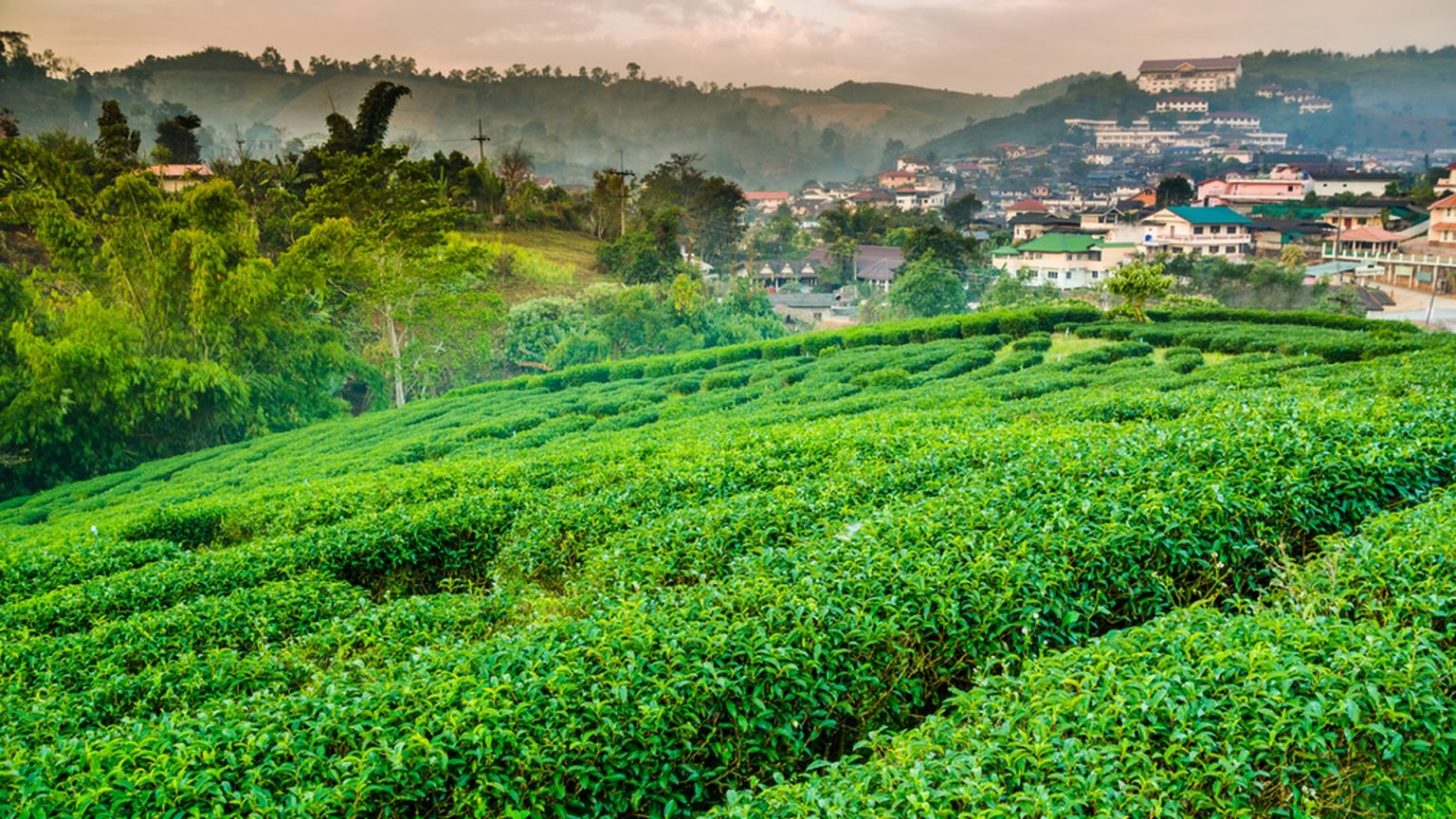
While specialty single-origin Arabica coffee has earned Chiang Mai global acclaim, northern Thailand conceals an ancient, far more profound botanical treasure: its high-altitude tea plantations, organic mountain gardens, and wild forest tea trees (Camellia sinensis var. assamica).
Perched between 1,000 and 1,600 meters above sea level across the mist-shrouded peaks of Mae Taeng, Fang, Doi Ang Khang, and Mae On, northern Thailand’s tea terroirs produce some of the most complex, award-winning specialty teas in Asia. Here, cool mountain breezes, mineral-rich forest soils, and heavy morning fog create the perfect microclimate for cultivating floral High-Mountain Oolongs (Jin Xuan No. 12 and Ruan Zhi No. 17), honeyed organic black teas, delicate white teas, and centuries-old wild tree Pu-erh teas. From donning a woven bamboo harvesting basket to hand-pluck tender young tea buds at the award-winning Araksa Tea Garden, to exploring the terraced mountain steps of the Doi Ang Khang Royal Agricultural Station and savoring biodiversity-preserving forest teas at Monsoon Tea, this master guide provides an insider roadmap to Chiang Mai’s cloud tea trail. Backed by organic agricultural research from the Department of Agriculture of Thailand, highland crop records from the Royal Project Foundation, agro-tourism archives from the Tourism Authority of Thailand, cultural documentation from the Fine Arts Department of Thailand, and regional municipal frameworks from the Chiang Mai Provincial Administrative Organization, this comprehensive guide reveals the top tea plantations, tasting flights, and scenic road trips in 2026.
Key Highlights of the Chiang Mai Tea Trail Guide
- The 3 Indigenous Tea Terroirs: (1) Forest-Grown Wild Assamica (Miang) growing naturally in primary rainforest canopies, (2) High-Mountain Taiwanese Oolong Cultivars (No. 12 & No. 17) introduced to highland ridges, and (3) Certified Organic Artisan Estate Teas.
- The 5 Leading Tea Sanctuaries: Araksa Tea Garden (Mae Taeng organic estate), Doi Ang Khang Royal Station (Fang mountain pass), Monsoon Tea (forest-friendly wild biodiversity teahouses), Raming Tea House Siam Celadon (historic colonial manor), and Doi Wawee (500-year-old wild tree Pu-erh ridge).
- Hands-On Plucking & Roasting Experiences: Learning the traditional “one leaf, one bud” hand-harvesting technique, followed by wood-fired iron wok panning and kneading for 550 to 850 THB ($15 to $24 USD).
- The Gong Fu Cha Ceremonial Ritual: Experiencing meditative multi-infusion tea tastings using Yixing clay pots, aroma cups, and mountain spring water.
- Scenic Road Trip Itinerary: Driving Highway 107 North from Chiang Mai through the limestone gorges of Mae Taeng to the high-alpine ridges of Fang and Doi Ang Khang.
1. The 3 Indigenous Tea Terroirs of Northern Thailand
Understanding northern Thai tea requires examining the botanical ecology documented by the Royal Project Foundation and the Department of Agriculture:
1. Wild Forest-Grown Tea (Camellia sinensis var. assamica)
Indigenous to the primary rainforests of northern Thailand for thousands of years. Unlike monoculture plantation tea bushes that are pruned into low waist-high hedges, wild forest tea grows as towering trees reaching 10 to 15 meters in height under dense jungle canopies. Harvesting wild leaves prevents deforestation, as local mountain communities protect the native rainforest to sustain their harvest.
2. High-Mountain Oolong Cultivars (Doi Ang Khang & Doi Wawee)
Introduced in the 1980s under Royal Project crop replacement programs to eradicate opium cultivation. Premium Taiwanese cultivars—specifically Jin Xuan (Oolong No. 12) with its natural creamy, milky aroma and Ruan Zhi (Oolong No. 17) with its refined orchid-floral bouquet—thrive at elevations between 1,200 and 1,600 meters where cold mountain nights slow leaf growth, concentrating natural aromatic amino acids.
3. Certified Organic Highland Artisan Tea
Specialty estates like Araksa in Mae Taeng utilize chemical-free, regenerative agriculture, creating hand-crafted black, white, and green teas that regularly win international gold medals at the Paris AVPA Tea Awards.
“When you sip forest-grown wild tea in Chiang Mai, you are tasting the biodiversity of northern Thailand. The tea roots delve deep into untamed jungle soil, absorbing the minerals of ancient banyan trees, wild orchids, and mountain springs.”
— Kenneth Rimdahl, Founder of Monsoon Tea
2. In-Depth Profiles of Chiang Mai’s Top 5 Tea Sanctuaries
1. Araksa Tea Garden (Mae Taeng Valley)
Situated on rolling green hills at the foot of Doi Chiang Dao in Mae Taeng (approx. 50 minutes north of the Old City), Araksa is one of the oldest certified organic tea estates in Thailand.
- The Experience: Guests strap traditional hand-woven bamboo baskets to their waists, walk through manicured rows of Assam tea bushes alongside local indigenous tea masters, and learn to harvest the tender top leaf and bud. Afterward, participants roast their freshly plucked leaves in wood-fired iron woks and roll them by hand.
- The Colonial Teahouse: Relax in an airy white wooden teahouse enjoying tea-infused culinary pairings (e.g., crispy tea-leaf salads, green tea noodle soup, and organic tea cocktails).
- Tour Cost: 550 to 850 THB ($15 to $24 USD) per person including guided harvest and tea tasting flight.
2. Doi Ang Khang Royal Agricultural Station (Fang District — 1,400m Elevation)
Located 160 kilometers north of Chiang Mai along the Myanmar border, Doi Ang Khang is a magical alpine valley renowned for its dramatic stepped tea plantations (Rai Cha 2000).
- The Landscape: High-altitude terraces plunge down steep mountain ridges often blanketed in thick morning sea-of-mist inversions. Visitors can wander through the royal tea processing facility, sample hot Oolong No. 17 at mountain pavilions, and explore surrounding temperate fruit orchards.
3. Monsoon Tea (Wat Ket Riverside & One Nimman)
A globally celebrated social enterprise committed to Forest-Friendly Wild Tea.
- The Concept: Monsoon Tea works with indigenous Karen and Lahu mountain communities who harvest wild tea leaves growing naturally in harmony with old-growth jungle forests without pesticides or deforestation.
- The Tearoom: Their flagship teahouse in the historic Wat Ket district on Charoen Rat Road serves multi-course tea tasting flights (white, green, oolong, black, and fermented Lanna Pu-erh) paired with vegan desserts.
4. Raming Tea House Siam Celadon (Tha Phae Road — Old City)
Housed inside a magnificent, restored 19th-century white-teak colonial manor surrounded by lush fern gardens on Tha Phae Road. Savor traditional imperial English afternoon tea sets and single-estate northern Thai black teas served in authentic celadon porcelain teapots (250 to 450 THB / $7 to $12.50 USD).
5. Doi Wawee & Ancient 500-Year-Old Wild Tea Trees
Located on the northern mountain divide between Chiang Mai and Chiang Rai, Doi Wawee was settled by ethnic Yunnanese Chinese families who cultivate centuries-old wild tea trees, producing hand-pressed, fermented Lanna Pu-erh tea cakes that age for decades.
3. Northern Thailand Top 5 Tea Sanctuaries Comparison Matrix
| Tea Estate / Teahouse Entity | Location & Mountain Elevation | Signature Tea Cultivars & Style | Tour & Tasting Flight Cost (THB / USD) | Atmosphere & Highlights |
|---|---|---|---|---|
| Araksa Tea Garden | Mae Taeng Valley; 650m elevation | Certified Organic Assamica; Silk Black Tea, White Tea. | 550–850 THB ($15–$24 USD) (2-hr Guided Harvest Tour) |
Award-winning organic estate, colonial teahouse, hands-on roasting. |
| Doi Ang Khang (Rai Cha 2000) | Fang District; 1,400m elevation | High-Mountain Oolong No. 12 & No. 17; Green Tea. | FREE Entry; Tea purchases: 150–350 THB |
Stepped alpine terraces, sea of mist, mountain pass switchbacks. |
| Monsoon Tea (Wat Ket) | Charoen Rat Road, Wat Ket | Forest-Friendly Wild Jungle Tea; Lanna Pu-erh, Herbal. | Tasting Flights: 120–220 THB ($3.40–$6.20 USD) | Eco-conservation teahouse, wild biodiversity focus, chic riverside soi. |
| Raming Tea House | Tha Phae Road (Near Moat) | Single-Estate Northern Black Tea, Herbal Blends. | Afternoon Tea Set: 250–450 THB ($7–$12.50 USD) | 19th-century colonial white teak mansion, lush garden courtyard. |
| Doi Wawee Tea Ridge | Highland Yunnan Ridge; 1,300m | 500-year-old Wild Tree Pu-erh; Aged Oolong Cakes. | Tasting: FREE with Purchase; Cakes: 600–2,500 THB |
Traditional Yunnanese Chinese tea village, clay pot tastings. |
4. The Hands-On Harvest Experience: Plucking to Wok Roasting
Participating in a traditional tea harvest at Araksa or Mae Kampong demystifies the artisanal craft:
- The Plucking Rule (One Leaf, One Bud): To produce top-grade white or black tea, only the tender, unopened terminal bud (covered in fine white down) and the two adjacent young leaves are selected. Older lower leaves are rejected for premium loose-leaf processing.
- Withering & Oxidation: Plucked leaves are spread across large bamboo trays in shaded pavilions to allow natural moisture evaporation and enzymatic oxidation (zero oxidation for green tea; partial oxidation for oolong; 100% full oxidation for black tea).
- Fixation & Wok Panning (Sha Qing): Leaves are tossed in searing-hot iron woks over wood fires to halt oxidation, sealing in delicate floral and honey notes.
- Rolling & Drying: The warm leaves are hand-rolled on wooden tables to gently break cell walls and release essential aromatic oils before final low-temperature oven drying.
5. Sourcing & Tea Tasting: High-Mountain Oolong vs. Wild Pu-erh
To select the highest quality loose-leaf teas across Chiang Mai’s specialty markets:
- Jin Xuan Oolong No. 12 (Milk Oolong): Tightly rolled into small dark-green spheres. When brewed with 90°C water, the leaves unfurl to release a naturally sweet, buttery, and creamy aroma with zero artificial flavorings.
- Ruan Zhi Oolong No. 17: Features a refined, crisp floral aroma reminiscent of wild white orchids and sweet mountain honey with a clean, lingering mineral finish.
- Lanna Wild Tree Pu-erh: Fermented and compressed into solid circular tea cakes (Bing Cha). Like fine wine, wild Pu-erh improves with age, developing rich earthy, leather, dark plum, and sweet forest floor notes over 5 to 20 years of dry storage.
6. Actionable Road Trip Logistics, Best Seasons & Storage
To plan a seamless tea adventure across northern Thailand:
- The Mae Taeng Valley Route (Araksa): Drive 50 minutes north from Chiang Mai along Highway 107. Turn onto Route 3038 toward Mae Taeng river gorge. Perfect for a morning half-day trip combined with the Bua Tong Sticky Waterfalls.
- The 2-Day Doi Ang Khang Expedition: Drive 3.5 hours north via Highway 107 through Chiang Dao and Fang. Due to steep 18% switchbacks climbing to 1,400 meters, rent a 160cc scooter (Honda ADV 160) or a reliable rental car. Stay overnight in a mountain resort to witness sunrise over the tea terraces at 6:30 AM.
- Best Harvest Season:
- Spring Flush (March to May): The most fragrant, highly prized first harvest of the year.
- Winter Tea (November to February): Cold mountain temperatures produce exceptionally sweet, smooth Oolongs with zero bitterness.
- Loose-Leaf Storage Tip: Store loose-leaf Oolongs and green teas in airtight, opaque tins away from light, heat, and kitchen spices to preserve delicate volatile aromatics for up to 2 years.
Conclusion
Chiang Mai’s cloud tea trail is an enchanting journey of sensory mindfulness, ecological harmony, and ancient mountain culture. By harvesting tender tea buds beneath the misty shadow of Doi Chiang Dao, experiencing a meditative Gong Fu Cha tasting in a historic colonial teahouse, and savoring the floral sweetness of high-mountain Oolongs, travelers discover the peaceful, aromatic soul that makes northern Thailand truly unforgettable.