
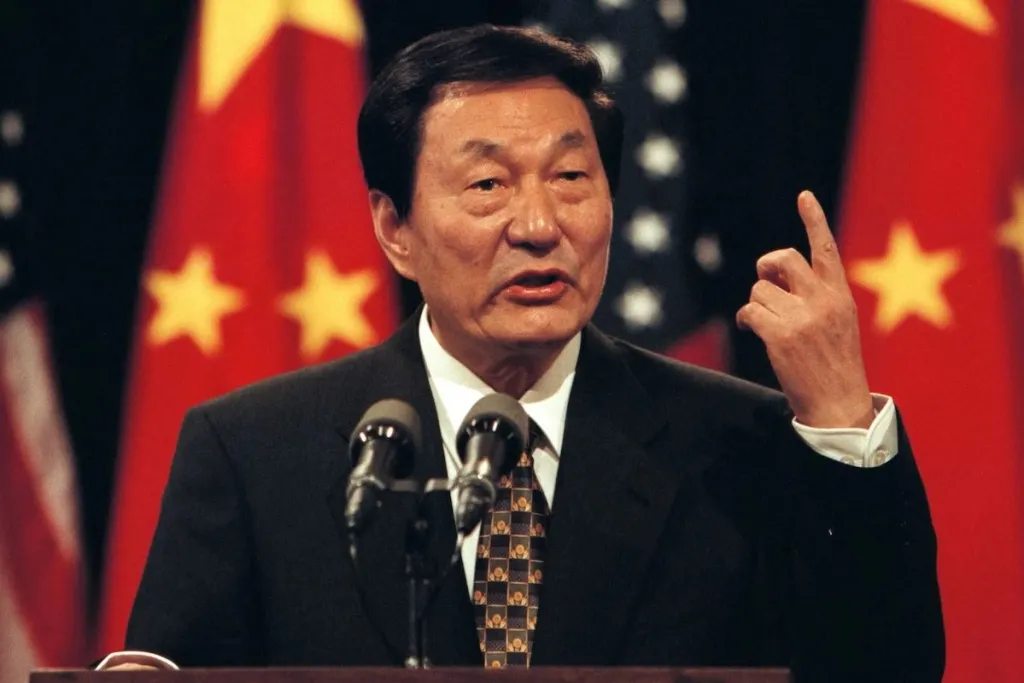
Former Chinese Premier Zhu Rongji, the decisive technocrat and economic strategist whose sweeping market transformations in the 1990s helped ignite China’s multi-decade economic expansion and integration into the global trading system, has passed away in Beijing at the age of 97.
As documented in commemorative retrospectives across Asia Times and global business coverage by CommonWealth Magazine, Zhu served as China’s Vice Premier in charge of the economy from 1991 to 1998 and Premier from 1998 to 2003 under President Jiang Zemin. Widely dubbed the “Economic Czar,” Zhu overhauled inefficient state-owned enterprises (SOEs), engineered a macroeconomic “soft landing” to tame double-digit inflation, and personally steered landmark negotiations to secure China’s accession to the World Trade Organization (WTO) in December 2001.
Key Takeaways from the Economic Legacy of Zhu Rongji
- Historic WTO Entry in 2001: Championed structural market opening and international trade rule compliance, transforming China into the world’s leading export manufacturing powerhouse.
- Radical State-Owned Enterprise (SOE) Overhaul: Pushed through the “Grasp the Large, Let Go of the Small” (Zhua Da Fang Xiao) policy, privatizing or shuttering tens of thousands of loss-making state factories.
- Macroeconomic Soft Landing & Inflation Control: Guided the economy from 24% inflation in 1994 down to single digits while maintaining steady GDP growth through monetary tightening.
- Creation of Modern Banking & Tax Infrastructure: Established the 1994 fiscal tax-sharing system and founded asset management companies (AMCs) to carve out non-performing loans from state commercial banks as detailed by China Daily Asia.
Deep Dive: The 1990s Reform Crucible and State Enterprise Restructuring
When Zhu took charge of China’s economic portfolio in the early 1990s, the nation faced mounting structural crises: runaway urban inflation, severe “triangular debt” between interconnected state suppliers, and millions of workers tied to insolvent, cradle-to-grave “iron rice bowl” state enterprises.
Zhu implemented bold, market-disciplined restructuring. By forcing state enterprises to operate on commercial profit-and-loss principles, his administration closed unprofitable factories, restructured commercial debt, and created modern corporate shareholding structures. Although these wrenching reforms resulted in painful short-term worker reallocations, they unlocked massive private sector productivity, enabling private entrepreneurs and joint ventures to flourish.
“Reform always demands courage, sacrifice, and an uncompromising commitment to long-term economic rationality. Entering the global trading arena required us to align domestic enterprise discipline with international market standards.”
Major Macroeconomic Reforms Executed Under Premier Zhu Rongji Matrix
| Strategic Economic Reform Policy | Implementation Timeline | Key Structural Mechanism | Long-Term Global & Domestic Economic Impact |
|---|---|---|---|
| WTO Accession & Trade Opening | 1999–2001 (Finalized Dec 2001) | Substantial tariff reductions, service sector opening, and intellectual property frameworks. | Catalyzed export boom; foreign direct investment (FDI) surged; China became world’s factory floor. |
| SOE Restructuring (Zhua Da Fang Xiao) | 1997–2002 | Consolidating core strategic conglomerates while privatizing small municipal state firms. | Eliminated fiscal subsidies; fostered dynamic private enterprises and competitive global champions. |
| Fiscal Tax-Sharing System Reform | 1994 | Separating national and provincial tax revenues; creating the State Taxation Administration. | Restored central government fiscal capacity to fund nationwide national highway and rail infrastructure. |
| Banking Modernization & AMCs | 1998–1999 | Creating four national asset management companies to absorb $170B in bad bank loans. | Recapitalized the “Big Four” state banks, preparing them for international public stock exchange listings. |
WTO Accession: High-Stakes Diplomacy and Global Supply Chains
Zhu’s defining global achievement was bringing China into the World Trade Organization. In 1999, facing intense domestic resistance from conservative ministries fearful of foreign agricultural and automotive competition, Zhu personally intervened during marathon negotiations with U.S. Trade Representative Charlene Barshefsky to strike a bilateral agreement.
Zhu strategically utilized external WTO rules as an “external lever” to force domestic bureaucratic and industrial monopolies to modernize. The reduction of import tariffs from an average of over 40% down to under 10% integrated China into global just-in-time value chains, setting the stage for China to overtake Japan as the world’s second-largest economy in 2010.
Taming Inflation and Navigating the 1997 Asian Financial Crisis
Zhu’s macroeconomic acumen was tested during two major financial crises in the 1990s:
- Engineered Soft Landing (1993–1996): Raised benchmark interest rates, restricted real estate credit bubbles, and strictly disciplined municipal bond issuances, bringing consumer price inflation from 24% down to under 3% without inducing an economic recession.
- Resisting Renminbi Devaluation (1997–1998): During the 1997 Asian Financial Crisis, when neighboring currencies collapsed, Zhu pledged to keep the Chinese Yuan stable, preventing a secondary wave of competitive devaluations across Southeast Asia and earning international praise for monetary statesmanship.
- Founding Modern Financial Regulators: Established the China Securities Regulatory Commission (CSRC) and specialized insurance and banking regulatory bodies to oversee emerging capital markets.
Technocratic Governance and the Fight Against Corruption
Trained as an electrical engineer at Tsinghua University, Zhu was famous for his sharp wit, pragmatic problem-solving, and zero-tolerance stance on bureaucratic corruption:
- Uncompromising Inspection Drives: Personally investigated grain storage fraud, customs smuggling syndicates, and financial irregularities across coastal provinces.
- Separating the Military from Commercial Business: Mandated that the People’s Liberation Army (PLA) divest from commercial hotels, manufacturing companies, and trading firms to ensure professional military governance.
- Establishing Premier Business Schools: Founded the Tsinghua University School of Economics and Management (Tsinghua SEM) to educate future generations of international business leaders and financial analysts.
Enduring Lessons for Modern Macroeconomic Policymakers
For economic planners, corporate strategists, and international trade executives navigating contemporary global fragmentation:
- Leverage International Standards for Domestic Modernization: Constructive engagement with global multilateral institutions provides a powerful framework for driving domestic productivity gains.
- Decisively Address Non-Performing Financial Assets: Transparently isolating bad debt into specialized resolution vehicles prevents systemic banking gridlock and restores credit flow.
- Balance Central Fiscal Capacity with Local Entrepreneurial Agility: Maintain robust central revenue collection for infrastructure while fostering competitive regional commercial autonomy.
Conclusion
The passing of Zhu Rongji marks the conclusion of an extraordinary chapter in global economic history. His technocratic resolve, fierce market discipline, and vision of global integration transformed China from an insulated economy into a central pillar of international commerce, leaving an indelible imprint on the modern global economic landscape.
For macroeconomic historians, international trade strategists, and business leaders studying the architecture of modern global commerce, Zhu Rongji’s legacy stands as a testament to the power of decisive policy reform, institutional modernization, and the courage to embrace transformative market integration in the face of entrenched resistance.