

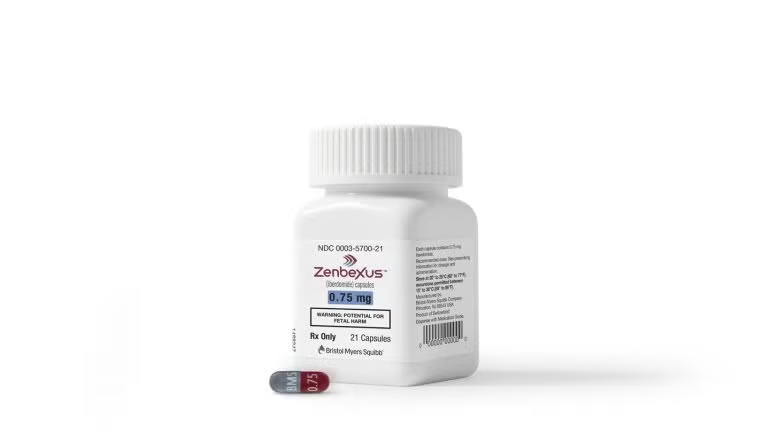
In a major therapeutic breakthrough for patients battling advanced hematologic cancers, the U.S. Food and Drug Administration (FDA) has granted accelerated approval to Zenbexus (iberdomide), developed by biopharmaceutical leader Bristol Myers Squibb (BMS).
As announced in clinical regulatory disclosures reported across Pharmaceutical Technology, Zenbexus is officially the world’s first cereblon E3 ligase modulator (CELMoD) approved by the FDA. The therapy is authorized in combination with daratumumab, hyaluronidase-fihj, and dexamethasone (the ZDd quadruplet regimen) for adult patients with relapsed or refractory multiple myeloma (RRMM) who have received at least one prior line of therapy containing both a proteasome inhibitor and an immunomodulatory drug.
Key Takeaways from the FDA Zenbexus Approval
- First Approved CELMoD Molecule: Introduces a novel class of targeted protein degraders engineered to overcome tumor resistance to older immunomodulatory drugs (such as lenalidomide and pomalidomide).
- Combination with Daratumumab (ZDd Regimen): Administered alongside subcutaneous anti-CD38 antibody daratumumab and low-dose dexamethasone for synergistic malignant plasma cell clearance.
- Phase 3 EXCALIBER-RRMM Efficacy: Regulatory approval was driven by statistically significant progression-free survival (PFS) and overall response rate (ORR) gains in the pivotal Phase 3 EXCALIBER clinical trial.
- Addressing Hard-to-Treat Relapses: Provides an essential oral outpatient therapeutic option for heavily pre-treated patients as supported by the American Cancer Society.
Deep Dive: Molecular Mechanism of Cereblon E3 Ligase Modulators (CELMoDs)
Multiple myeloma is a cancer of bone marrow plasma cells that frequently develops resistance to standard front-line therapies. Older immunomodulatory drugs (IMiDs) functioned by binding to the cereblon protein to facilitate the breakdown of tumor-promoting factors. However, malignant myeloma cells routinely downregulate cereblon expression or develop point mutations, causing disease relapse.
Zenbexus (iberdomide) was engineered with a distinct chemical structure that binds cereblon with more than 20-fold greater affinity than legacy agents. Once bound, Zenbexus induces rapid ubiquitination and proteasomal degradation of the essential transcription factors Ikaros (IKZF1) and Aiolos (IKZF3). This dual action triggers direct apoptosis (programmed cell death) in resistant myeloma cells while potently stimulating patient T-cells and Natural Killer (NK) immune cells to attack surviving tumor clones.
“The approval of Zenbexus marks the dawn of the CELMoD era in hematologic oncology. By harnessing targeted protein degradation with exceptional binding potency, we can successfully overcome drug resistance and deliver durable clinical responses for patients who have exhausted traditional lines of therapy.”
Multiple Myeloma Therapeutic Classes & Mechanism Comparison Matrix
| Therapeutic Class & Drug Name | Primary Molecular Target | Mechanism of Action | Clinical Line of Setting & Key Advantage |
|---|---|---|---|
| Zenbexus (Iberdomide) — CELMoD | Cereblon (CRBN) / Ikaros & Aiolos | High-affinity targeted protein degradation & immune co-stimulation. | FDA Approved (August 2026); overcomes lenalidomide/pomalidomide refractory resistance. |
| Revlimid (Lenalidomide) — 2nd Gen IMiD | Cereblon (Moderate Affinity) | Standard immunomodulation and anti-angiogenesis. | First-line standard maintenance; widely genericized across global markets. |
| Pomalyst (Pomalidomide) — 3rd Gen IMiD | Cereblon (Enhanced Affinity) | Targeted degradation of lymphoid transcription factors. | Third-line and late-stage relapsed settings. |
| Darzalex (Daratumumab) — Monoclonal Ab | CD38 Surface Antigen | Complement-dependent cytotoxicity (CDC) and antibody-dependent cellular phagocytosis (ADCP). | Front-line and relapsed quadruplet backbone therapy. |
| Carvykti (Cilta-cel) — CAR-T Therapy | BCMA Antigen | Genetically re-engineered autologous T-cells targeting BCMA-positive plasma cells. | Single-infusion cellular therapy requiring specialized hospital inpatient administration. |
Clinical Trial Evidence: The Phase 3 EXCALIBER-RRMM Outcomes
The FDA’s accelerated approval is based on safety and efficacy data from the global Phase 3 EXCALIBER-RRMM trial (NCT04975997), which randomized over 700 patients across international academic medical centers:
- Progression-Free Survival (PFS) Superiority: Patients receiving the Zenbexus + daratumumab + dexamethasone (ZDd) combination achieved a statistically significant 43% reduction in the risk of disease progression or death compared to standard active control arms.
- Deep Minimal Residual Disease (MRD) Negativity: A substantial proportion of patients achieved MRD negativity at 10⁻⁵ sensitivity, indicating profound cellular clearance of malignant plasma clones.
- Manageable Safety Profile: The most common adverse events included neutropenia, anemia, and fatigue, which were effectively managed through standard dose adjustments and prophylactic growth factor support without unexpected cardiotoxicity or secondary primary malignancies.
Commercial Access and Oral Outpatient Treatment Convenience
Unlike complex cell therapies (such as CAR-T and bispecific antibodies) that require specialized medical center inpatient monitoring for cytokine release syndrome (CRS), Zenbexus offers an accessible oral administration profile:
- Community Oncology Accessibility: Oral capsule dosing allows patients to receive treatment at local community oncology clinics, eliminating the need for extensive travel to specialized tertiary academic hospitals.
- Combination Flexibility: The ZDd regimen integrates smoothly into existing clinical infusion schedules, minimizing administrative burdens on outpatient oncology nursing staff.
- Co-Pay and Patient Assistance Programs: BMS has activated comprehensive access programs through BMS Access Support to assist Medicare and commercially insured patients with reimbursement and co-pay navigation.
Implications for the Global Multiple Myeloma Pipeline
The validation of the CELMoD platform paves the way for further advancements across oncology:
- Investigation in Earlier Treatment Lines: Clinical trials are already evaluating Zenbexus in newly diagnosed multiple myeloma (NDMM) as an induction and post-transplant maintenance regimen.
- Expansion into Non-Hodgkin Lymphomas: Next-generation CELMoDs (including mezigdomide) are advancing through Phase 2/3 trials for diffuse large B-cell lymphoma (DLBCL) and follicular lymphoma.
- Combination with BCMA Bispecific Antibodies: Early clinical data suggests combining oral CELMoDs with T-cell engagers creates a highly potent synergistic anti-tumor immune microenvironment.
Actionable Clinical Guidance for Hematologists and Care Teams
For medical oncologists, clinical nurse specialists, and oncology pharmacists preparing to prescribe Zenbexus:
- Establish Baseline Complete Blood Counts (CBC): Monitor absolute neutrophil counts (ANC) weekly during the initial two cycles of therapy, utilizing G-CSF support when necessary.
- Enforce Standard Venous Thromboembolism (VTE) Prophylaxis: Prescribe daily low-dose aspirin or direct oral anticoagulants (DOACs) based on individual patient thromboembolic risk scoring.
- Counsel Patients on Dosing Adherence: Emphasize the importance of taking Zenbexus on an empty stomach at the same time each evening during active cycle days.
Conclusion
The FDA accelerated approval of Zenbexus (iberdomide) marks a transformative milestone in multiple myeloma treatment. By delivering a potent, first-in-class targeted protein degrader in an accessible oral combination, Bristol Myers Squibb has provided oncologists and patients with a vital new weapon against drug-resistant hematologic cancers.