

In a historic development for vector-borne infectious disease prevention, the European Medicines Agency (EMA) has officially validated the Marketing Authorization Application (MAA) for PF-07307405 (VLA15), a multivalent Lyme disease vaccine candidate developed in partnership by Pfizer Inc. and specialty vaccine manufacturer Valneva SE.
As confirmed in joint regulatory disclosures, validation by the European Medicines Agency formally begins the scientific evaluation process for what could become the world’s only commercially available human Lyme disease vaccine. The regulatory submission is supported by encouraging efficacy exceeding 70% in the pivotal Phase 3 VALOR (“Vaccine Against Lyme for Outdoor Recreationists”) multi-center clinical trial (NCT05477524), demonstrating robust protection in participants aged five years and older across endemic regions in Europe and North America.
Key Takeaways from the Lyme Disease Vaccine Regulatory Filing
- EMA Regulatory Review Underway: Validation confirms the completeness of the submission dossier, initiating standard technical assessment by the Committee for Medicinal Products for Human Use (CHMP).
- Broad 6-Valent Serotype Coverage: Targets the six most prevalent outer surface protein A (OspA) serotypes of Borrelia burgdorferi sensu lato, providing comprehensive protection across North America and Europe.
- Phase 3 VALOR Efficacy >70%: Demonstrated high protective efficacy against clinical Lyme disease with a favorable safety profile across adult and pediatric cohorts.
- Addressing an Unmet Global Need: Lyme disease cases have surged over 300% across the Northern Hemisphere due to expanding deer tick habitats as monitored by the CDC.
Deep Dive: The Unique Mechanism of Outer Surface Protein A (OspA) Vaccines
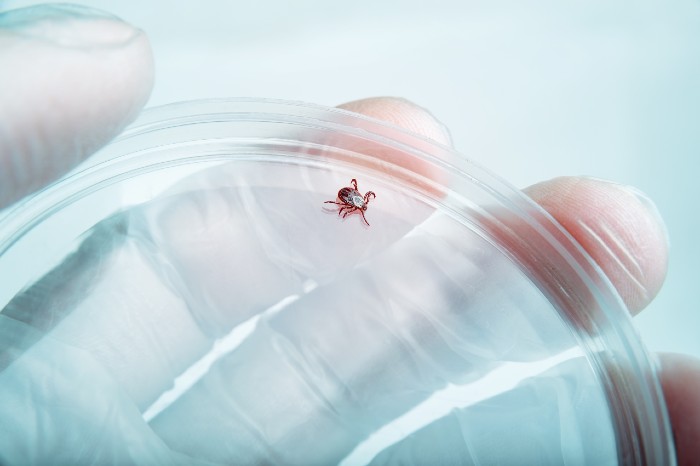
Unlike traditional human vaccines that trigger antibody responses to destroy bacteria inside the human bloodstream, the Pfizer-Valneva OspA vaccine employs a unique “midgut neutralization” mechanism. The Borrelia spirochete bacteria that cause Lyme disease reside primarily inside the midgut of feeding Ixodes deer ticks.
When an immunized human is bitten by an infected tick, antibodies present in the ingested blood meal enter the tick’s digestive tract. These antibodies bind directly to the bacteria’s Outer Surface Protein A (OspA), neutralizing the spirochetes inside the tick before they can undergo conformational change, migrate to the salivary glands, and transmit into human skin tissues. This preventive barrier stops infection before the pathogen ever enters the human host.
“Lyme disease is the most common vector-borne illness in the Northern Hemisphere, causing chronic neurological and arthritic complications for hundreds of thousands of patients annually. The validation of our regulatory application brings us one step closer to providing the first preventive vaccine against Lyme disease in over twenty years.”
Tick-Borne Disease Vaccines & Clinical Pipeline Comparison Matrix
| Vaccine Candidate / Product | Developer & Platform | Antigenic Target & Valency | Regulatory & Clinical Trial Status |
|---|---|---|---|
| PF-07307405 (VLA15) | Pfizer / Valneva (Recombinant Protein) | 6-Valent OspA (Serotypes 1–6) | EMA MAA Validated (August 2026); Phase 3 VALOR efficacy >70%; FDA BLA filing planned. |
| LYMErix (Historical) | SmithKline Beecham (Withdrawn 2002) | Monovalent OspA (Serotype 1 only) | Withdrawn from commercial market in 2002 due to narrow serotype coverage and low public adoption. |
| mRNA-1982 | Moderna (Lipid Nanoparticle mRNA) | Multi-Antigen Outer Surface Proteins | Phase 1/2 Dose-Escalation Clinical Investigation. |
| FSME-IMMUN / Ticovac | Pfizer (Inactivated Virus) | Tick-Borne Encephalitis (TBE) Virus | Fully approved and widely administered across Central and Eastern Europe. |
Clinical Trial Safety and Pediatric Immunogenicity
The Phase 3 VALOR clinical trial enrolled over 9,000 participants across endemic trial sites in the United States, Canada, Germany, the Netherlands, Poland, and Sweden:
- Pediatric Cohort Outperformance: Children aged 5 to 17 exhibited even higher geometric mean antibody titers than adult participants, confirming strong immune responsiveness in younger demographics most vulnerable to tick bites during outdoor play.
- Booster Dose Schedule: The primary vaccination series consists of three initial doses administered prior to the spring tick season, followed by a seasonal booster 12 months later to sustain neutralizing antibody levels.
- Tolerability & Adverse Events: The trial reported mild-to-moderate transient injection-site tenderness and mild headache, with no serious vaccine-related neurological or autoimmune safety signals observed.
Global Epidemiology: Climate Change and Expanding Tick Habitats
The urgent demand for an effective Lyme disease vaccine is driven by shifting ecological and climate patterns across temperate regions:
- Milder Winters & Extended Feeding Seasons: Shorter winter frost periods allow blacklegged ticks (Ixodes scapularis and Ixodes ricinus) to survive in higher latitudes and remain active for ten months of the year.
- Geographic Expansion into Suburban Corridors: Reforestation and residential expansion into woodland edges have multiplied human-deer-tick contact interfaces across New England, the Upper Midwest, Central Europe, and Scandinavia.
- Rising Chronic Post-Treatment Lyme Syndrome (PTLDS): Up to 15% of patients treated with standard antibiotics experience prolonged fatigue, cognitive brain fog, and musculoskeletal joint pain, highlighting the vital need for primary vaccine prevention.
Commercial and Public Health Distribution Strategies
Following potential regulatory approvals in Europe and North America, Pfizer and Valneva are structuring public health deployment models:
- Targeted Seasonal Immunization Campaigns: Public health agencies plan to recommend annual pre-spring vaccination drives for outdoor forestry workers, agricultural laborers, hikers, and residents of hyper-endemic regions.
- Travel Medicine Integration: Travel clinics will offer the vaccine to international tourists visiting endemic camping and hiking destinations in North America and the Alpine European region.
- Streamlined Manufacturing Operations: Pfizer’s global supply chain network will handle bulk sterile manufacturing and fill-finish distribution to ensure global inventory availability.
Actionable Guidance for Clinicians and Outdoor Enthusiasts
While awaiting vaccine commercial availability, healthcare providers and outdoor recreationists should continue standard preventative measures:
- Perform Daily Tick Checks: Conduct thorough full-body inspections after spending time in tall grass, leaf litter, or forested hiking trails.
- Utilize EPA-Registered Repellents: Apply DEET, Picaridin, or Oil of Lemon Eucalyptus (OLE) to exposed skin, and treat outdoor clothing with 0.5% permethrin.
- Recognize Classic Early Symptoms: Promptly evaluate expanding circular red skin rashes (Erythema migrans “bullseye” rash), sudden fever, joint stiffness, and fatigue with your physician.
Conclusion
The European Medicines Agency’s validation of Pfizer and Valneva’s Lyme disease vaccine application marks a historic milestone in preventative medicine. By delivering over 70% protective efficacy against multiple Borrelia serotypes, PF-07307405 offers long-awaited hope for curbing the global burden of Lyme disease.