
While the gleaming golden spire of Wat Phra That Doi Suthep commands the skyline above Chiang Mai, the true spiritual heart of northern Thailand lies hidden beneath the dense jungle canopy of the Doi Suthep-Pui National Park mountain ridge. Here, centuries-old stone pathways marked by saffron robes tied to ancient dipterocarp trees lead pilgrims and mindful travelers to secluded forest monasteries where Buddhist monks have practiced meditation in harmony with nature since the 14th-century founding of the Lanna Kingdom.
1. Executive Summary: The Living Spiritual Heart of Northern Thailand
Among these sacred sanctuaries, the mystical jungle temple of Wat Pha Lat (Wat Sakithaka) and the 700-year-old subterranean brick labyrinths of Wat Umong Suan Phutthatham represent two of the most profound cultural experiences in Southeast Asia. Backed by historical preservation data from the Fine Arts Department of Thailand, national park conservation guidelines from the Department of National Parks, Wildlife and Plant Conservation, and cultural heritage insights from the Tourism Authority of Thailand, this comprehensive guide details step-by-step hiking directions, navigation maps, required temple attire, monk chat protocols, and essential monastic etiquette for exploring Chiang Mai’s sacred forest temples.
Key Takeaways from the Secret Forest Temples Guide
- The Historic Monk’s Trail (Pha Lat Hike): A moderate 45-minute jungle ascent following a mountain stream marked with saffron cloth, connecting the base of Suthep Road to the hidden waterfalls of Wat Pha Lat.
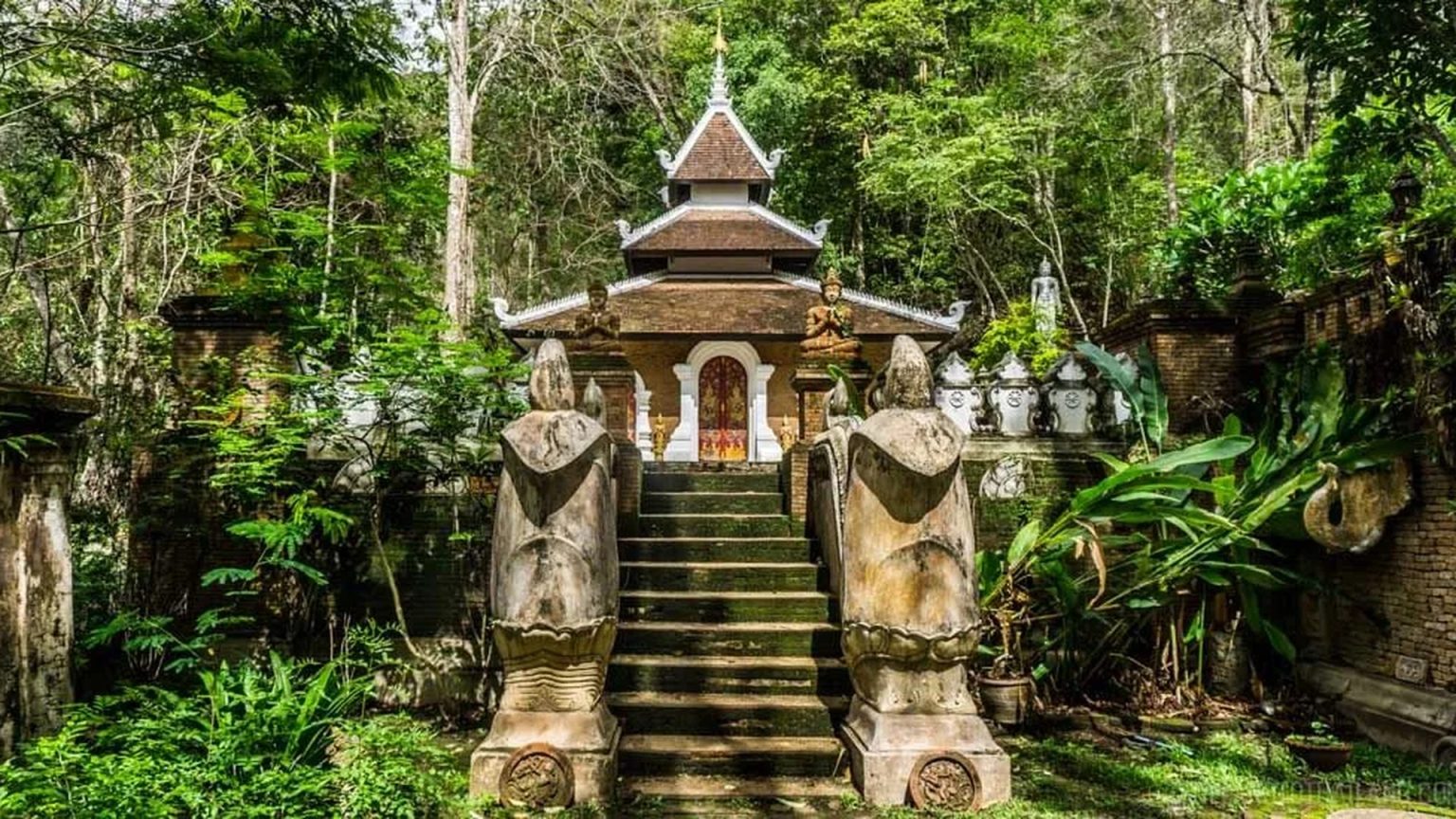
- Wat Pha Lat Jungle Sanctuary: An ancient 14th-century Burmese-Lanna stone monastery built over cascading natural waterfalls, surrounded by moss-covered stupas and stone dragons.
- Wat Umong Subterranean Tunnels: Built in 1297 by King Mengrai to provide acoustic silence for meditating forest monks, featuring arched tunnels, a tranquil forest deer sanctuary, and a serene lake.
- Sacred Etiquette & Dress Standards: Non-negotiable requirements for covering shoulders and knees, removing shoes before entering ubosots, and respectful communication during Monk Chat programs.
- Optimal Seasonal Timing: Why early mornings (6:30 AM – 8:30 AM) during the lush Green Season (July to November) offer roaring streams, misty vistas, and tranquil meditation courtyards.
2. Deep Dive: Hiking the Historic Monk’s Trail (Pha Lat Nature Trail)
For centuries before the construction of the paved winding mountain road by the revered monk Khruba Siwichai in 1935, pilgrims and forest monks ascended Doi Suthep exclusively on foot along a sacred mountain footpath known as the Pha Lat Trail.
Trailhead Logistics & Starting Point
The trailhead begins at the western termination of Suthep Road, just past the rear entrance of Chiang Mai University (CMU) Faculty of Engineering and the popular Basecamp Trail Cafe. To reach the starting point:
- By Red Songthaew / Grab: Request drop-off at “Pha Lat Trailhead” or the radio broadcast tower station at the base of Suthep Road. Fares from Old City or Nimman average 60 to 100 THB ($1.70 to $2.80 USD).
- By Scooter: Drive west along Suthep Road until the road narrows into a quiet forested cul-de-sac with dedicated motorcycle parking and national park trailhead signage.
The Hike to Wat Pha Lat (Section 1)
The first stage of the trail spans approximately 1.8 kilometers (1.1 miles) with a gradual 220-meter elevation gain, taking roughly 40 to 50 minutes at a moderate walking pace.
- Follow the Saffron Cloth Markers: The path is clearly marked by strips of consecrated orange monastic robes wrapped around forest trees. These serve a dual purpose: blessing the ancient trees against illegal logging and guiding pilgrims along the ridge.
- Cross the Wooden Stream Bridges: The trail ascends alongside the Huay Kaew stream. During the green and cool seasons, the sound of rushing water and birdsong creates an immediate transition from urban bustle to wilderness serenity.
- Arrival at the Waterfall Gateway: The trail emerges directly into the lower courtyards of Wat Pha Lat, where ancient stone stairs flanked by multi-headed Naga serpents welcome hikers into the temple grounds.
“Walking the Monk’s Trail is not merely an athletic hike; it is an active meditation. As you step along the tree roots and cross the mountain stream, the noise of modern life fades into the rhythmic breathing of the forest, preparing the mind for the profound silence of Wat Pha Lat.”
3. Inside Wat Pha Lat: The Hidden Jewel on the Sloping Rock
Originally constructed during the reign of King Kuena (1355–1385) as a resting hermitage for royal elephants carrying sacred Buddha relics up Doi Suthep, Wat Pha Lat (literally translated as “Monastery on the Sloping Rock”) is unlike any other temple in Chiang Mai.
- Burmese & Lanna Fusion Architecture: Renovated by a wealthy Burmese merchant in the early 20th century, the temple structures feature intricate carved teakwood eaves, gilded peacock motifs, and whitewashed stone pagodas crowned with ornate golden umbrella spires (Hti).
- The Cascading Granite Waterfalls: The temple buildings are built organically around natural rock formations. During the wet season, mountain water rushes directly over the wide granite slabs between the shrines, offering breathtaking panoramic vistas of the Chiang Mai valley framed by lush jungle vines.
- Quiet Meditation Shrines: Small prayer pavilions house ancient stone Buddha statues draped in yellow silk, where resident forest monks and solitary meditators practice mindfulness undisturbed by commercial tour buses.
4. Wat Umong Suan Phutthatham: The Ancient Subterranean Forest Sanctuary
Located in the foothills south of Chiang Mai University along Suthep Soi 4, Wat Umong (The Tunnel Temple) is a 700-year-old forested monastery commissioned in 1297 by King Mengrai, the founder of Chiang Mai.
- The Subterranean Brick Meditation Tunnels: King Mengrai constructed vaulted brick tunnels beneath a large forested earthen mound to provide acoustic silence and thermal cooling for a famous meditating forest monk named Thera Chan. Inside the cool, dim tunnels, small arched niches house revered Buddha statues where incense softly burns.
- The Weathered 14th-Century Stupa: Surrounding the top of the tunnel mound stands a massive, unadorned bell-shaped Lanna chedi covered in green moss, surrounded by native teak trees and stone sculptures.
- The Forest of Broken Buddha Statues: Scattered along the walking paths are weathered, damaged Buddha images rescued from destroyed temples across northern Thailand, serving as a visual Buddhist teaching on the universal law of impermanence (Anicca).
- The Wildlife Sanctuary & Meditation Lake: Wat Umong encompasses a sprawling wildlife preservation sanctuary where free-roaming spotted deer, pigeons, and turtles inhabit the forest. Visitors can buy food pellets (10–20 THB) to feed the fish and turtles at the tranquil central lake.
5. Chiang Mai Sacred Temple Comparison Matrix
| Sacred Temple Entity | Historical Era & Foundation | Architectural Style & Setting | Key Sacred Artifacts & Features | Accessibility & Trail Access | Entry Fee & Suggested Time |
|---|---|---|---|---|---|
| Wat Pha Lat (Wat Sakithaka) | Founded 14th Century (King Kuena) | Burmese-Lanna teak; built on active natural waterfall and granite boulders. | Carved stone Nagas, mossy forest chedis, peacock eaves, riverside meditation pavilions. | Hiking via Monk’s Trail (45 min) or scooter via Doi Suthep Road. | Free Admission; 6:30 AM – 9:00 AM for serenity. |
| Wat Umong Suan Phutthatham | Founded 1297 (King Mengrai) | Subterranean brick vaulted tunnels beneath forested earthen mound. | Ancient tunnel frescoes, broken Buddha statue forest, sacred deer sanctuary, lake. | Easy access via Suthep Soi 4 / Nimman via scooter or red songthaew. | Free Admission; 7:00 AM – 5:00 PM daily. |
| Wat Phra That Doi Suthep | Founded 1383 (King Kuena) | Golden mountain stupa; peak elevation (1,060m) overlooking Chiang Mai. | Sacred holy bone relic of the Buddha, 306-step Naga staircase, golden parasols. | Road access via mountain highway or 2-hour strenuous extension hike from Pha Lat. | 30 THB Foreigner Entry; Cable car 20 THB. Sunrise/sunset peak. |
| Wat Sri Suphan (Silver Temple) | Founded 1500 (Wualai Silversmiths) | Handcrafted repoussé aluminum and pure silver Ubosot. | Silver zodiac murals, handcrafted Lanna metalwork reliefs, Friday Monk Chat. | Wualai Road (South of Old City); easily walkable from Chiang Mai Gate. | 50 THB Entry; Best on Saturday night walking street. |
| Wat Chedi Luang Varavihara | Founded 1441 (King Saen Muang Ma) | Colossal ruined brick Lanna pagoda (originally 82m high). | Former home of the Emerald Buddha, City Pillar (Inthakin), daily Monk Chat. | Center of Old City (Phra Pok Klao Road); walkable from all Old City gates. | 50 THB Entry; Open 6:00 AM – 6:00 PM. |
6. Temple Etiquette, Attire Standards, and Monk Chat Programs
Visiting active Buddhist monasteries in Thailand requires strict adherence to cultural and spiritual norms monitored by the Chiang Mai Provincial Religious Affairs Office:
- Strict Dress Code (Shoulders and Knees Covered): Both men and women must wear shirts with sleeves (no tank tops or sleeveless shirts) and long pants, long skirts, or knee-length shorts. If hiking in athletic gear, carry a lightweight sarong or zip-off travel pants to cover up before stepping onto temple grounds.
- Shoe Removal Protocol: Always remove your shoes before stepping into any Ubosot (ordination hall), Viharn (assembly hall), or tunnel corridor. Look for designated wooden racks outside entrances.
- Body Language & Feet Direction: In Thai Buddhist culture, the feet are considered the lowest and spiritually unpurest part of the body. When sitting in front of a Buddha statue or monk, tuck your feet behind you (in the kneeling Thep Phanom position); never point the soles of your feet toward sacred images or monks.
- Interactions with Monks: Women must never physically touch a Buddhist monk or hand items directly to them (place offerings on a monk’s offering cloth or table). Greet monks with a respectful high Wai (pressing palms together near the nose and bowing the head slightly).
- Monk Chat Programs: Participate in informal conversational exchanges at Wat Chedi Luang or Wat Suan Dok, where foreign visitors can converse with novice and senior monks in English about Buddhist philosophy, daily monastic routines, and meditation while helping monks practice language skills.
7. Actionable Guidance for Hikers, Photographers, and Meditators
To ensure a safe, enriching, and respectful journey through Chiang Mai’s forest temples:
- Start at Sunrise (6:30 AM – 7:00 AM): Begin your hike at first light to enjoy cool mountain temperatures, soft golden photographic light through the trees, and the tranquil sounds of early morning monastic chanting.
- Pack Essential Hiking Supplies: Wear sturdy trail running shoes with good grip (temple rocks and mossy stone steps can be slippery after rain), bring natural mosquito repellent, and carry at least 1 liter of drinking water.
- Respect Meditation Silence: Maintain quiet voices, switch mobile phones to silent, and refrain from using flash photography inside prayer halls or near meditating practitioners.
Conclusion
Chiang Mai’s forest temples are timeless sanctuaries where natural beauty and ancient Lanna spirituality merge into an unforgettable journey. By ascending the shaded trails of the mountain, respecting sacred monastic traditions, and stepping into the silent tunnels of history, travelers discover the enduring peaceful essence that has protected northern Thailand for over seven centuries.