

Chiang Mai is renowned for its laid-back atmosphere, lush mountain landscapes, and vibrant digital nomad communities. However, navigating the city’s decentralized transportation network and annual meteorological cycles requires clear, practical local knowledge.
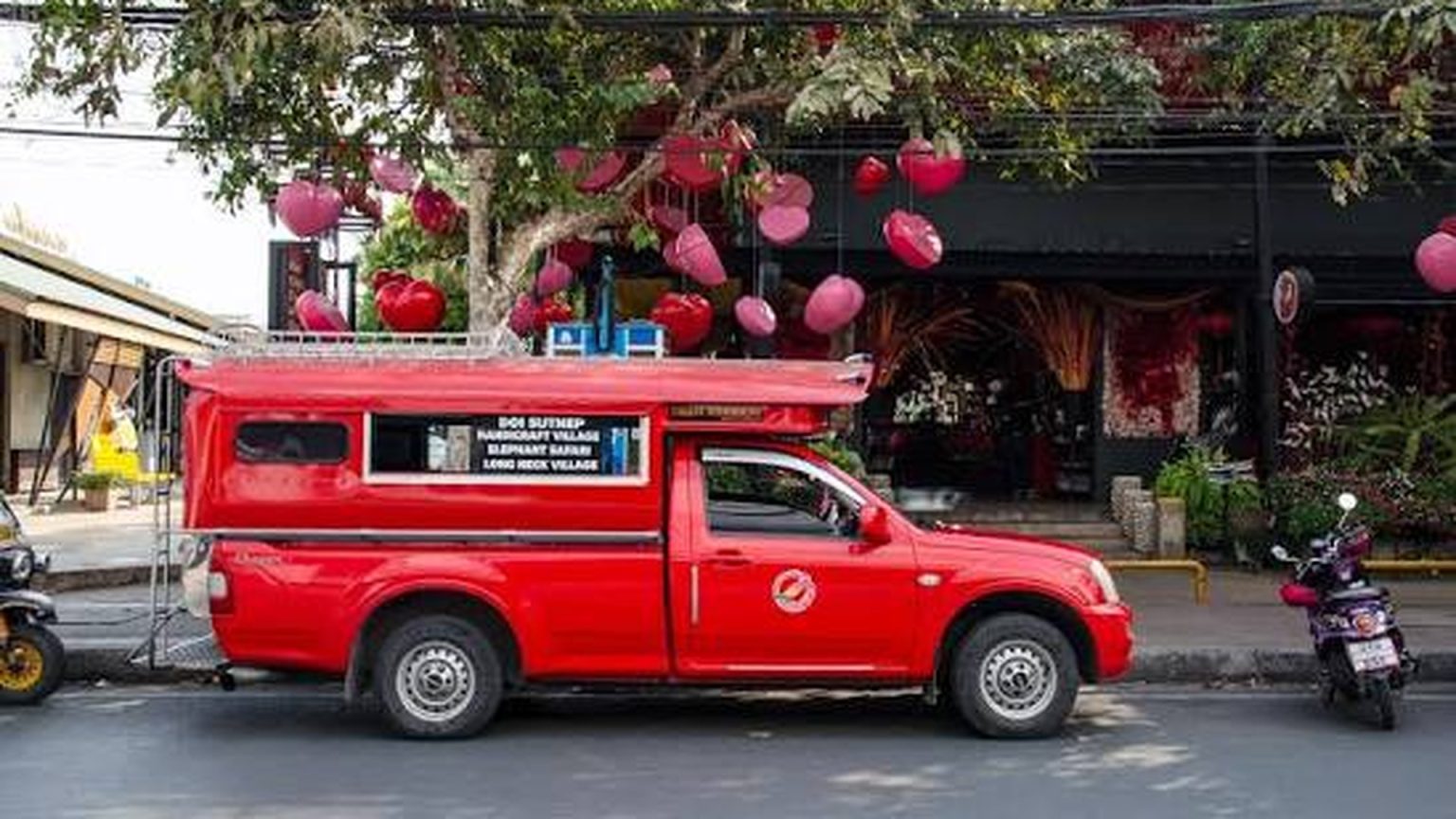
Unlike Bangkok, Chiang Mai has no underground MRT subway or elevated BTS Skytrain; instead, daily mobility relies on modified red pickup trucks (Songthaews), ubiquitous automatic scooters, and app-based ride-hailing platforms.
Furthermore, living comfortably in northern Thailand requires seasonal foresight. While the cool winter months (November to February) offer ideal weather, the annual agricultural burning season (mid-February through April) brings heavy particulate matter (PM2.5) smog into the mountain valleys. Backed by transit regulations from the Department of Land Transport Thailand, safety advisories from the Royal Thai Police, air quality monitoring from Air4Thai Pollution Control Department, and municipal insights from the Chiang Mai Provincial Administrative Organization, this comprehensive guide provides an actionable survival blueprint covering daily transit hacks, scooter legal compliance, airport transfers, and seasonal air quality mitigation strategies.
Key Takeaways from the Chiang Mai Transit & Survival Blueprint
- The 30–40 THB Songthaew Rule: How to hail and ride Chiang Mai’s shared red trucks without paying inflated tourist rates.
- Ride-Hailing Economics (Grab vs. Bolt vs. InDrive): Why using secondary apps like Bolt and InDrive cuts airport and cross-town fares by 30% to 50% compared to standard airport taxis.
- Scooter Rental & Police Checkpoint Guide: Essential rules for riding legally in Thailand, navigating regular traffic checkpoints at Maya Mall and Old City gates, and avoiding mandatory 500–1,000 THB fines.
- Burning Season Playbook (February to April): How to prepare your apartment with HEPA filtration, monitor real-time AQI sensors, and coordinate seasonal migration to southern Thai islands.
- Regional Transit Connections: How to utilize blue, yellow, and white songthaews from Chang Phueak and Arcade terminals for day trips to Mae Rim, San Kamphaeng, and Lamphun.
1. Mastering the Red Songthaew (Rod Daeng)
The iconic crimson modified pickup trucks known as Rod Daeng (Red Cars) or Songthaews (literally “two benches”) serve as Chiang Mai’s primary public transit system. They operate as flexible, shared hop-on-hop-off taxis without fixed routes.
The Golden Rules of Hailing a Red Truck
- Hail with a Downward Hand Wave: Extend your arm at waist level and gently flutter your hand downward (palm down). Never point directly with your index finger, as this is considered impolite in Thai culture.
- State Your Major Landmark Briefly: When the driver slows down, approach the passenger-side window and state your destination simply (e.g., “Pratu Tha Phae”, “Nimman Soi 5”, or “Kad Luang Warorot”).
- NEVER Ask “How Much?”: Asking “How much to go?” instantly signals to the driver that you are unaware of local pricing, often prompting an inflated quote of 100 to 150 THB. If the driver nods in agreement to your destination, simply walk to the back, step up into the truck bed, and take a seat.
- Standard Municipal Fares: The official municipal flat fare within the core urban zone (Old City, Nimman, Santitham, Night Bazaar, Chiang Mai Gate) is 30 to 40 THB ($0.85 to $1.15 USD) per person. Longer trips out to Arcade Bus Station, the Railway Station, or Central Festival typically cost 50 to 80 THB.
- Press the Buzzer to Stop: When approaching your destination, press one of the red buzzer buttons located on the roof interior. Walk up to the driver’s cab window to hand over exact cash (keep 20 and 50 THB notes ready).
Regional Color-Coded Songthaews
For budget-friendly excursions beyond the city center, colored Songthaews operate from dedicated terminals with fixed fares supervised by the Tourism Authority of Thailand:
- Yellow Trucks (Chang Phueak Terminal): Travel north to Mae Rim, Mae Taeng, and Chiang Dao (fares: 30–60 THB).
- White Trucks (Warorot Market): Travel east to San Kamphaeng (hot springs and handicraft villages, 25–40 THB).
- Blue Trucks (Warorot Market): Travel south to the ancient historical province of Lamphun (30 THB).
“Mastering the red truck is the rite of passage for every Chiang Mai resident. When you step into the back alongside local students and market vendors for 30 baht, the entire city suddenly feels connected, unhurried, and welcoming.”
2. Ride-Hailing Apps: Grab vs. Bolt vs. InDrive vs. Maxim
When you need direct, air-conditioned point-to-point transport—especially with luggage or late at night—mobile ride-hailing apps provide transparent alternatives:
- Grab: The most established and widely available app, but also the most expensive. Grab offers guaranteed rides, premium cars (GrabCar), and motorcycle taxis (GrabBike). Ideal during morning rainstorms when other apps experience driver shortages.
- Bolt: Highly popular among expats and digital nomads. Fares on Bolt are consistently 30% to 45% cheaper than Grab for identical routes. A trip from Chiang Mai International Airport (CNX) to Nimman typically costs 80 to 120 THB on Bolt versus 180 to 240 THB on Grab. Payment can be set to cash or linked credit card.
- InDrive: Operates on a peer-to-peer bidding model where passengers propose a fare and nearby drivers accept or counter-offer. Excellent for long-distance trips to Mon Jam or Samoeng Loop.
- Maxim: A budget-focused option offering economical motorcycle and mini-car bookings, particularly useful in outer residential districts like Hang Dong and San Sai.
3. Chiang Mai Transportation Modes Matrix
| Transit Mode | Operational Scope & Range | Typical Cost Range (THB / USD) | Best Use Case & Target Destination | Insider Advice & Pitfalls to Avoid |
|---|---|---|---|---|
| Red Songthaew (Rod Daeng) | Urban core (Old City, Nimman, Santitham, Night Bazaar). | 30–40 THB ($0.85–$1.15) flat municipal rate. | Casual day-to-day hops across central neighborhoods. | Avoid asking the price upfront; keep exact 20/50 THB change. |
| Scooter Rental (125cc–160cc) | Full autonomy across city and mountain loops. | 2,500–3,500 THB/month ($70–$100) or 200–250 THB/day. | Daily nomad commuting, Doi Suthep, and Mae Rim day trips. | Always carry an IDP motorcycle license; wear helmets to avoid police fines. |
| Bolt / InDrive Apps | Point-to-point across greater Chiang Mai. | 70–140 THB ($2.00–$4.00) for urban trips. | Airport runs, rainy day commutes, late-night dinners. | Significantly cheaper than Grab; allow 5–8 min extra for driver arrival. |
| GrabCar / GrabBike | Point-to-point high-availability service. | 140–250 THB ($4.00–$7.00) for cars; 40–80 THB for bikes. | Rush-hour airport transit and guaranteed prompt pickups. | Higher peak surge pricing during storms and festival weekends. |
| Yellow/Blue/White Songthaews | Provincial outskirts and satellite towns. | 25–60 THB ($0.70–$1.70) fixed zone fares. | Day trips to Lamphun, Mae Rim, and San Kamphaeng. | Departs from Chang Phueak Terminal and Warorot Market; leaves when full. |
4. Scooter Rentals, Safety & Police Checkpoints
Renting a 125cc to 160cc automatic scooter (such as a Honda Click, Honda Lead, or Yamaha Grand Filano) provides unparalleled freedom to explore mountain viewpoints, hidden cafes, and outer markets. However, strict legal compliance is enforced by traffic officers from the Royal Thai Police.
Legal Requirements for Riding in Thailand
- International Driving Permit (IDP) with Motorcycle Category: Under Thai law, foreign drivers must carry a valid domestic driver’s license alongside an International Driving Permit (1949 or 1968 Convention) specifically stamped for motorcycles (Category A). A standard car license does NOT legally permit riding a 125cc scooter.
- Mandatory Helmet Enforcement: Both drivers and passengers are legally required to wear a strapped safety helmet. Fines for riding without a helmet range from 500 to 1,000 THB.
- Insurance Coverage: Verify that your travel/expat medical insurance policy covers motorcycle accidents. Most insurance providers (e.g., SafetyWing, Luma) require you to be legally licensed in both your home country and Thailand for claims to be valid.
Frequent Police Checkpoint Hotspots
Chiang Mai traffic police operate routine checkpoints between 9:00 AM and 2:00 PM on major transit arteries:
- Maya Mall Intersection (Huay Kaew Road / Superhighway): Operating near the entrance to Nimmanhaemin.
- Chang Phueak Gate (North Moat): Located along the inner and outer moat roads.
- Tha Phae Gate & Chiang Mai Gate (South Moat): Stations checking oncoming traffic entering the Old City.
- The Superhighway underpasses near Central Festival.
If stopped at a checkpoint, remain calm, polite, and respectful. Present your passport copy/photo, domestic motorcycle license, and valid IDP. If cited for an infraction, pay the official fine receipt at the local police station or mobile payment desk.
5. The Burning Season Survival & Escape Playbook (Feb to April)
Northern Thailand’s geographical basin is subject to a unique meteorological phenomenon during late winter and early spring. As farmers across the region and neighboring border valleys clear agricultural fields, temperature inversions trap smoke against the surrounding mountain ridges, causing particulate matter (PM2.5) levels to rise.
In-Room Preparation & Daily Mitigation
- Install a Dedicated HEPA Air Purifier: Equip your apartment or condo bedroom with a high-grade HEPA purifier (e.g., Xiaomi Smart Air Purifier 4 Pro or Smartmi). Keep doors and balcony windows sealed with weather-stripping foam tape.
- Monitor Real-Time Air Quality Apps: Download the Air4Thai app or AirVisual to track hourly PM2.5 readings. An AQI under 50 is green (healthy), 100–150 is moderate, and readings above 180 warrant wearing fitted N95 or KF94 respirator masks outdoors.
- Upgrade Air Conditioner Filters: Purchase 3M Filtrete electrostatic air cleaning sheets at HomePro or Central Festival to line your wall-mounted A/C unit filters, providing secondary air filtration.
The Seasonal Migration Strategy (Escaping South)
Many long-term expats and digital nomads plan an annual 4-to-6-week migration during the peak burning window (March 1 to April 15):
- Direct Flights to Southern Thailand: Chiang Mai International Airport (CNX) operates multiple daily direct flights via AirAsia, Bangkok Airways, and VietJet to coastal sanctuaries unaffected by northern smoke, including Phuket, Krabi, Koh Samui, and Hat Yai.
- International Hubs: Take advantage of short non-stop flights to Da Nang (Vietnam), Kuala Lumpur (Malaysia), or Singapore for a temporary coastal work retreat before returning for the vibrant, water-soaked celebrations of Songkran (Thai New Year) in mid-April.
6. Actionable Guidance for Visitors and Long-Stay Nomads
To optimize your daily transit and logistics across Chiang Mai:
- Download Bolt and Grab Before Arrival: Set up your payment accounts while on Wi-Fi so you can book rides immediately upon landing at CNX airport without queuing for expensive airport taxis.
- Inspect Rental Scooters Thoroughly: Photograph all pre-existing scratches, check tire tread depth, and test both front and rear brakes before signing rental contracts at reputable shops like Mango Bikes, Chloe Motorbikes, or Cat Motors.
- Embrace Off-Peak Travel Windows: Plan scooter commutes outside the 8:00–9:00 AM school run and 5:00–6:30 PM evening rush along the Superhighway and Nimman Soi 1.
Conclusion
Navigating Chiang Mai with confidence is all about understanding the local rhythm. By mastering the humble red songthaew, choosing the right ride-hailing apps, riding your scooter with full legal compliance, and planning ahead for seasonal climate shifts, you can experience northern Thailand at its absolute best—effortless, independent, and endlessly rewarding.