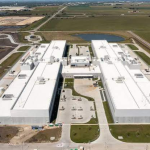


In a defining realignment of global industrial manufacturing that reflects the shifting economics of clean energy, South Korean battery conglomerate Samsung SDI has officially acquired American automaker General Motors’ (GM) entire 49.99% equity stake in their joint venture, SynergyCells.
The transaction, disclosed in regulatory filings and examined across global energy and automotive dispatches on Mgrid.org, Samsung SDI Official Investor Disclosures, Electrek, and CarbonCredits.com, hands Samsung SDI 100% sole ownership of the $3.5 billion battery mega-factory in New Carlisle, Indiana.
Originally established in 2023 to build nickel-rich prismatic and cylindrical cells for GM’s electric vehicle lineup, the facility carries an initial nameplate capacity of 27 gigawatt-hours (27 GWh) annually, with an engineered expansion path to 36 GWh, supporting over 1,600 advanced manufacturing jobs.
Crucially, alongside the buyout, Samsung SDI announced a profound strategic pivot: the entire initial 27 GWh production capacity will be redirected away from electric vehicles and re-tooled 100% for utility-scale Energy Storage Systems (ESS) and AI data center backup batteries.
Citing slower-than-projected consumer electric vehicle adoption alongside an unprecedented, multi-gigawatt surge in stationary storage demand from hyperscale cloud operators (including Google, Microsoft, and Amazon) and regional grid operators (PJM and MISO), Samsung SDI is converting its first wholly owned North American giga-factory into an industrial powerhouse dedicated to safeguarding the artificial intelligence power grid.
Key Takeaways from Samsung SDI’s Indiana Giga-Factory Buyout
- 100% Ownership Acquisition of $3.5B Complex: Samsung SDI buys out General Motors’ 49.99% stake in SynergyCells, creating Samsung’s first independently operated battery plant in North America.
- 27 GWh Capacity Re-Tooled for AI Grid Storage: Pivots the entire initial 27 GWh line (scaling to 36 GWh) from EV traction batteries to stationary utility-scale Energy Storage Systems (ESS).
- Driven by the Hyperscale Compute Boom: Captures explosive demand from AI data centers, which require multi-gigawatt-hour battery buffers to handle 100 kW+ liquid-cooled GPU racks.
- PRiMX High-Safety Prismatic Cell Chemistry: Focuses production on Samsung’s proprietary PRiMX prismatic lithium-ion cells, featuring integrated safety vents and high thermal runaway resistance.
- Full Section 45X Advanced Manufacturing Tax Credits: Qualifies for up to $35/kWh in domestic cell manufacturing credits and $10/kWh in module credits under the U.S. Inflation Reduction Act (IRA).
- Mass Production Targeted for 2027: Factory remains on schedule to begin commercial cell manufacturing in 2027 in New Carlisle, St. Joseph County, Indiana.
Architectural Blueprint: The EV-to-ESS Manufacturing Re-Tooling
Converting an automotive battery plant to stationary grid storage requires fundamental changes in cell engineering, cycle life optimization, and packaging.
1. Cycle Life vs. Volumetric Density
While automotive cells prioritize lightweight packaging and volumetric energy density (to maximize vehicle driving range), stationary grid storage demands extreme cycle longevity (6,000 to 10,000 deep discharge cycles over a 20-year lifespan) and superior thermal stability.
2. PRiMX Prismatic Form Factor Advantages
Samsung SDI’s PRiMX prismatic cells utilize rigid aluminum casing with integrated mechanical safety valves. If a cell experiences abnormal internal pressure, the valve opens safely, venting gas without initiating adjacent thermal runaway—making it ideal for dense multi-megawatt-hour containerized data center battery enclosures (as reported on Battery-News.de).
North American Battery Giga-Factory Strategy Comparison Matrix
Comparing Samsung SDI’s Indiana pivot against other major North American battery manufacturing complexes:
| Battery Giga-Factory Facility | Operating Sponsors & Owners | Total Capital & Production Footprint | Nameplate Annual Output (GWh) | Target Market Focus | Core Cell Chemistry | Production Status |
|---|---|---|---|---|---|---|
| Samsung SDI New Carlisle (St. Joseph County, IN) | Samsung SDI (100% Sole Ownership after GM Buyout) | $3.5 Billion (Multi-million sq ft) | 27 GWh → 36 GWh | 100% Utility ESS & AI Data Center Grid Storage (Pivoted from EV) | PRiMX Nickel-Rich NCA / LFP Prismatic Cells | Mass Production 2027 (Full Section 45X IRA credit) |
| Tesla Megafactory Lathrop (Lathrop, California) | Tesla Inc. (100% Owned) | ~$1.0 Billion (1M sq ft) | ~40 GWh (10,000 Megapack units/yr) | 100% Utility BESS & Large-Scale Microgrids | Prismatic LFP (Lithium Iron Phosphate) | Operational & Scaling |
| Form Factory 1 (Weirton, West Virginia) | Form Energy | $2.0 Billion (2M sq ft) | 50 GWh (Expanding to 120 GWh) | 100% Multi-Day 100-Hour Long-Duration Storage | Aqueous Iron-Air Reversible Rusting Chemistry | Commercial Shipments Starting (Anchored by Google 30 GWh deal) |
| Ultium Cells Spring Hill (Spring Hill, Tennessee) | General Motors & LG Energy Solution (50/50 JV) | $2.6 Billion | 50 GWh | Automotive EV Traction Packs (Cadillac LYRIQ) | Pouch NCMA (Nickel Cobalt Manganese Aluminum) | Operational (Supplying GM Ultium EV platforms) |
| BlueOval SK Battery Park (Glendale, Kentucky) | Ford Motor Company & SK On (50/50 JV) | $5.8 Billion (2 Plants) | ~86 GWh (Combined) | Automotive EV Traction Packs (Ford F-150 Lightning) | Pouch High-Nickel NCM Cells | Phased Commissioning 2026–2027 |
The Macro Squeeze: Why Automakers Squeeze While Storage Booms
The transaction highlights a profound divergence between automotive and electrical grid markets:
| Clean Energy Sector | Market Demand Velocity (2024–2026) | Pricing & Capacity Economics |
|---|---|---|
| Consumer Electric Vehicles (EVs) | Slower-than-expected growth (10–15% YoY) | Automakers delaying model rollouts & capex |
| Utility-Scale Energy Storage (BESS) | Explosive expansion (>35–50% YoY growth) | Extreme supply shortage; hyperscalers booking out years |
| AI Data Center Power Buffers | Unprecedented multi-GW procurement | Willingness to sign multi-billion-dollar advance offtakes |
As detailed in Electrek, while automotive original equipment manufacturers (OEMs) scaled back battery joint ventures to protect near-term automotive margins, data centers and grid utilities are facing severe shortages of high-quality lithium cells, creating an immediate, high-margin customer base for Samsung SDI.
Capturing the Midwest AI Corridor: Siting in the Heart of PJM & MISO
Geographically, New Carlisle, Indiana sits at the exact intersection of the nation’s most congested electrical grids:
- Direct Proximity to PJM Interconnection: PJM recently faced $1.2B in transmission congestion and enacted $555/MW-day capacity auction caps. Producing 27 GWh of battery storage locally allows Midwestern utilities (such as AEP, NIPSCO, and Commonwealth Edison) to deploy massive BESS projects to relieve transformer congestion.
- Powering Northern Indiana & Chicago Data Hubs: Siting storage adjacent to the expanding fiber and cloud corridors in South Bend, Fort Wayne, and Chicago provides hyperscalers with locally manufactured battery capacity that avoids trans-Pacific ocean shipping tariffs (as analyzed on CarbonCredits.com).
Financial Mechanics: Unlocking Full IRA Section 45X Subsidies
By taking 100% sole ownership, Samsung SDI maximizes its capture of federal manufacturing incentives:
- Section 45X Production Tax Credits: Under the Inflation Reduction Act, domestic battery cell production earns $35 per kilowatt-hour ($35/kWh) and domestic module assembly earns $10/kWh.
- The $1.2 Billion Annual Tax Benefit: At full 27 GWh annual capacity, the Indiana complex qualifies for up to $1.215 billion in annual Section 45X advanced manufacturing tax credits, significantly lowering production costs and boosting corporate profitability.
Actionable Playbook for Hyperscale Infrastructure Leads and Storage EPCs
For utility planners, data center developers, and battery system integrators:
- Secure Domestic Cell Offtake Agreements Early: Engage Samsung SDI’s commercial ESS sales teams to negotiate multi-gigawatt-hour cell supply contracts for 2027–2029 delivery, capturing IRA domestic content bonus credits.
- Standardize Containerized BESS on Prismatic Form Factors: Design data center microgrids around high-density prismatic cell architecture to take advantage of the Indiana plant’s specific production tooling.
- Deploy Storage to Offset Utility Interconnection Pauses: Utilize locally sourced battery storage systems to buffer peak data center demand, enabling rapid facility energization under emerging flexible interconnection tariffs (such as CAISO FILI or PJM IRAS).
Conclusion
Samsung SDI’s full acquisition of the $3.5 billion Indiana mega-factory and its strategic pivot to utility-scale energy storage represents a milestone in the realignment of the global clean technology economy. As the artificial intelligence revolution drives an insatiable demand for 24/7 resilient electricity, repurposing automotive battery capacity into grid-scale storage ensures that the energy infrastructure of the 21st century can withstand the exponential computing demands of tomorrow.
Samsung SDI’s decisive move demonstrates that the future of battery manufacturing belongs not just to electric mobility, but to the electrifying foundation of computational intelligence.